NT Knives
The maker behind the work

Nico
Trullenque.

One bladesmith. One backyard forge in Houston, Texas.

NT Knives started the way most serious things do, not with a plan, but with an obsession. What began as curiosity about how knives were actually made turned into late nights at a makeshift bench, learning by burning through material and making every mistake once.

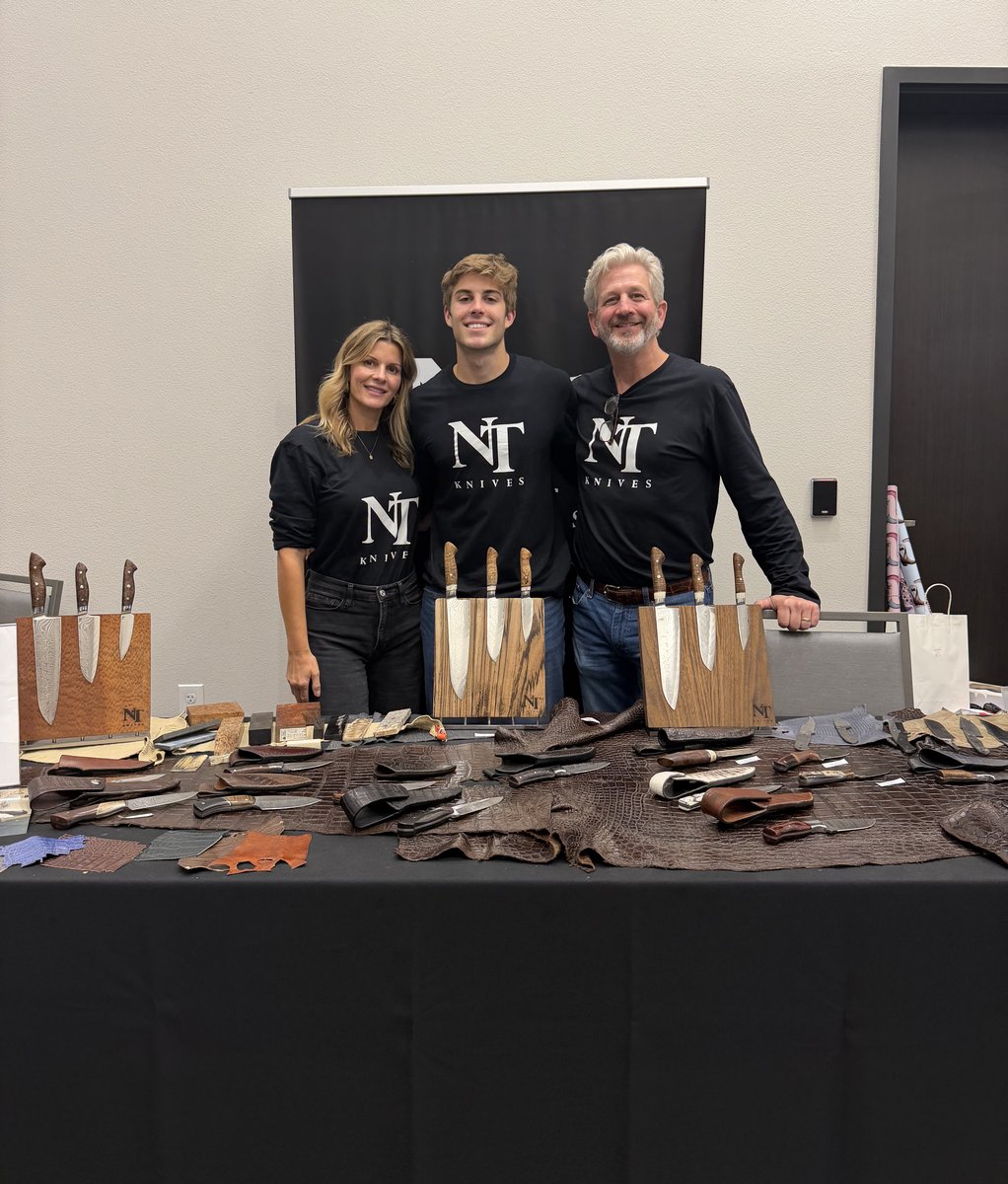
NT Knives at the knife show with family

How Damascus
is actually made.

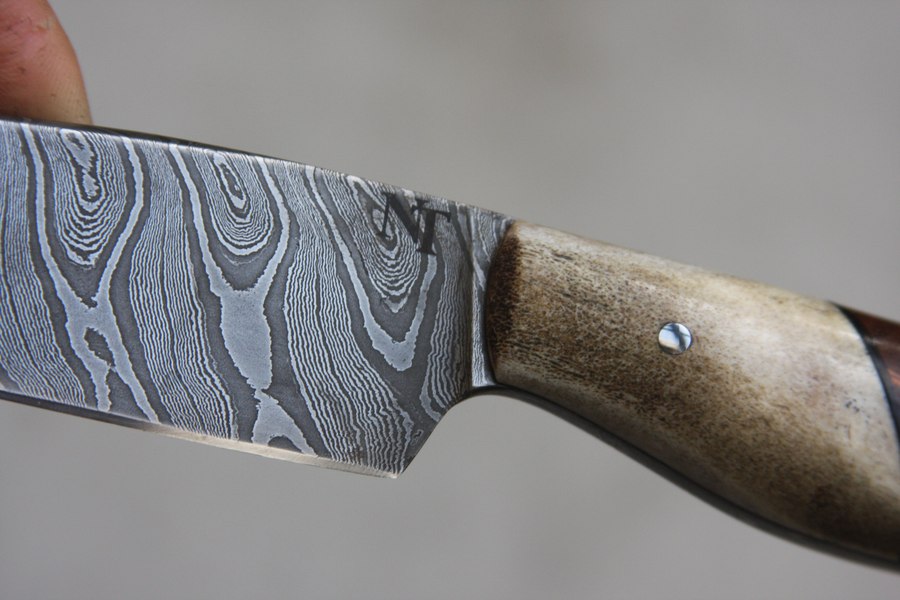
Damascus blade closeup

The patterns are the aftermath of an ancient forging process. I start with two different steel alloys, stack them, and forge-weld them into a solid billet. That billet gets hammered and folded on itself over and over at forging temperature, each fold doubling the layer count, until I'm working with 200 or more layers.

Once the pattern is set, the blade is ground close to its final shape, heat treated for hardness, then hand-sanded up to 2000 grit. An acid etch brings the layers to the surface, and a coffee soak deepens the contrast before a hand-applied wax finish.

It is a slow, physical process with a lot of chances to ruin a billet at every step. That's what makes it worth doing.
Leather work,
in house.

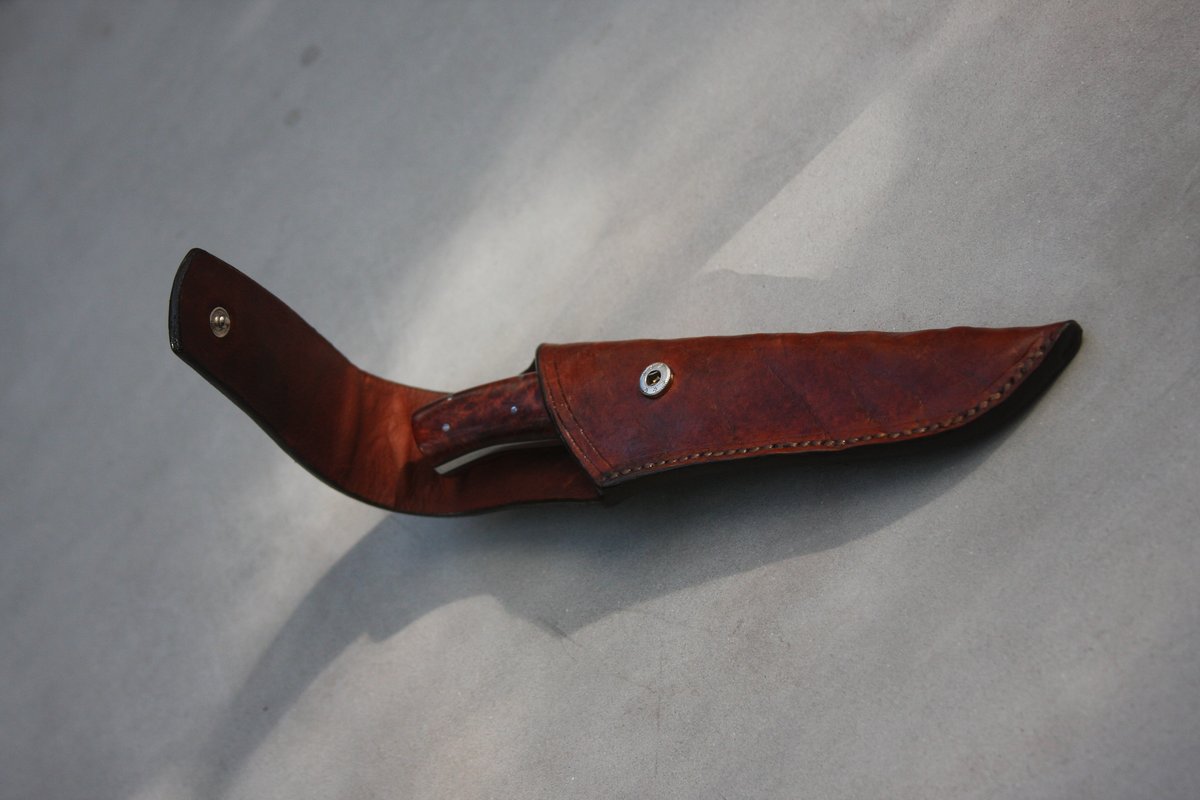
Red Amboyna leather sheath

Every hunting knife ships with a leather sheath I make myself, fitted to that specific blade. Exotic skins like alligator, ostrich, or lizard are available as an upcharge.

For chef knives, a leather sheath is available on request.

Nothing ordinary.

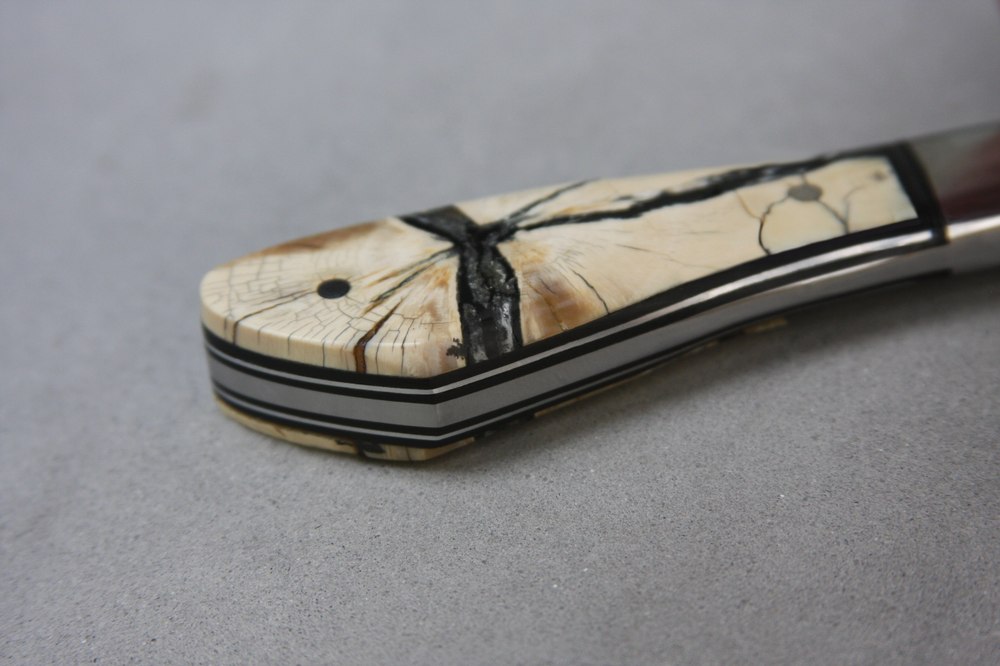
Mammoth ivory handle detail

Handle material here isn't the hardware-store stuff: stabilized exotic woods like Amboyna burl and curly mango, mammoth tusk, water buffalo horn, carbon fiber, meteorite, titanium. Spacers and liners in stainless, copper, or G10.

Every material is chosen on purpose and considered against the blade it's paired with, which is part of why the price is what it is.

Ready to start
a custom order?

Customize